Season’s Leavings

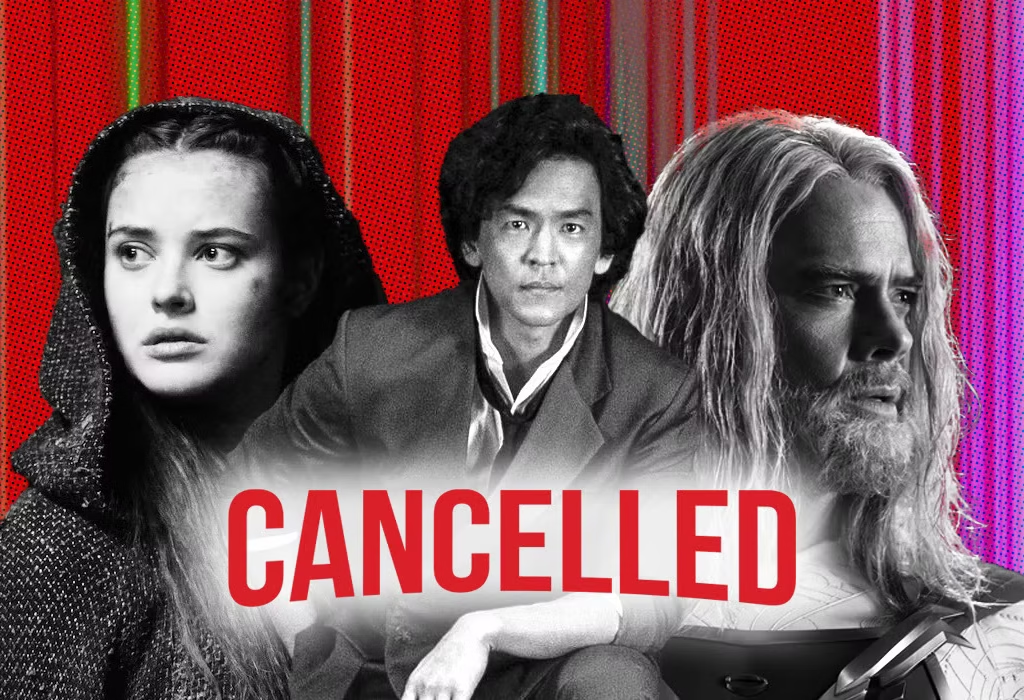
It feels like more and more nowadays the lifespan of the episodic series is getting smaller and smaller. With the rise of streaming services and the age of commercial restrictions, why does it feel like the length of our series is being restricted as well? Seasons seem to be shrinking shorter, episodes seem to be growing longer, but longer episodes only result in less of them per season. Not to mention, constant cancellations mean the number of seasons is plummeting as well. Modern television feels like that give-and-take that is never giving.
How was the formula for shows like Friends, Cheers and Big Bang Theory abandoned no more than a decade later, despite these shows being raging successes? It feels as if an 8-episode season, like HBO’s Euphoria, is the commonality in today’s television pool. A clear turning point during this transition was the popularization of streaming services as opposed to cable television. Many factors specific to streaming services contribute to changes in most television series’ formats, such as the erasure of commercial breaks and syndication, the rise of binge culture, and what streaming audiences respond to on these new platforms. Though our viewing platforms changed, was it necessary for our TV shows’ format to change along with them and was this change for the better?
In all fairness, the shortening of TV series was on the rise before the normalization of streaming services. This was due to the 2007 WGA writers’ strike that halted television productions across the nation. When productions resumed, there was a noticeable cut in episodes per season. Hit series such as “Lost,” “Scrubs” and “30 Rock” usually aired seasons with just over 20 episodes. However, each shows’ late 2007 seasons are cut to almost half of their regular length, and seasons produced after this were not even breaking the 20-episode mark. By the end of some of these shows, audiences are left with a 13-episode final season to complete series-long plot points and character developments.
While this was definitely the beginning of the shortening of seasons, it certainly was not the end. As Screen Rant’s Tiffany Beverly describes it, “Cable networks like HBO and AMC had already gotten into the habit of producing shorter, 10-13 episode seasons, but streaming services brought this practice into the mainstream.” But if early 2010s seasons during their worst strike are the length of regular television seasons today, how exactly did we get here?
A lot of things changed with the rise of streaming platforms, one of these being the end of syndication. Before the normalization of streaming platforms, many 90s and 2000s TV shows worked towards a specific type of licensing called rerun syndication. This authorization, provided by a production or syndication company, allowed networks to retelevise older episodes of past shows long after their series’ finale; better known as reruns. Additionally, not only would the show’s network of origin be granted access to broadcasting reruns, but other interested networks could buy and barter for the rights to broadcast them as well. Syndication contributed heavily to a show’s profitability and therefore was a milestone most shows strived to reach. To be granted this license, companies required shows to produce a minimum of 100 episodes to prove their lucrativeness. This was the motive behind many 20-episode seasons for pre-streaming TV series, as by the fifth season, the 100-episode barrier was breached. Some series would even do a special 100th episodes to celebrate syndication, which is a fun byproduct of this certification we rarely get to see anymore. With the loss of this practice, many shows lost the motivation and deemed it unnecessary to produce series with such lengthy seasons.
With the introduction of on-demand services to cable television and the rise of Netflix in the early 2010s many casual TV viewers were able to watch consecutive episodes of TV at their discretion for the first time in history. This elicited the term binge watching among TV goers, as Oxford dictionary defines it, “the practice of watching multiple episode of a television series in rapid succession.” While binge watching was a luxury that only a portion of Americans had access to, by the mid 2010s streaming was beginning to look like the new norm. Keeping that in mind binge watching became extremely trendy and for some the preferred method for consuming TV. According to a 2013 poll from Harris Interactive, 78% of Americans already utilize some type of on-demand service to watch TV, and around 62% of that same population admit to participating in binge-watching behaviors.
People often justify modern series with shorter seasons as being more easily digestible. 10 to 13 half-hour or hour-long episodes could be binged in a single day or for most Americans over the two day weekend. Furthermore, the scarcity of episodes demands that stories are methodically paced, which keeps viewers consistently engaged. These qualities brewed the perfect formula for binge-watching Americans and thus became the most common episodic format of television today. Consequently, the unique advantage TV has in comparison to other film media is lost while adapting to this format. Television allowed audiences to witness a story and its characters develop over an extended period of time. A period that spans far longer than what movies or theatre could accomplish without sequels, which often have large breaks between releases.
Good TV created a consistent viewing experience for viewers that familiarized them with a set of personalities and locations over a long-term basis. Creating this familiarity episode to episode often comforts viewers regardless of a show’s contents; this reaction is not exclusive to comedies or romance. As viewership of a series progresses by an individual, familiarity may evolve into a sense of belonging to a show and its characters. This, along with the countless character arcs and the extended time you spend with a TV show and its characters, only heightened the perfected form of escapism that TV once was. The problem that causes many to grow weary of the television format we most often see today is that they feel too much like movies. They’re riddled with meticulously and evenly spread out plot points and clear and concise character arcs for a quick and efficient viewing experience, with extremely long periods between releases. These characteristics break the sense of belonging and intimacy viewers once had with most of, if not every one of their TV shows.
